Every firework on earth — every chrysanthemum shell, every 500-gram cake, every cold-spark stage device — descends from a single Tang-dynasty experiment in a Liuyang bamboo grove. A monk named Li Tian (李畋) stuffed gunpowder into a sealed bamboo tube, lit the end, and built the bang that the next 1,400 years of pyrotechnics were written around. That tube is the firecracker (鞭炮 / 爆竹). It is still made here. It is still the foundation of our catalog.
This guide is written for buyers sourcing wholesale firecrackers from China — Bateria importers in Mexico, Spain and Brazil, GCC distributors stocking weddings and Eid, Southeast Asian wholesalers loading Chinese New Year and Diwali containers, and traditional retailers across the Chinese diaspora.
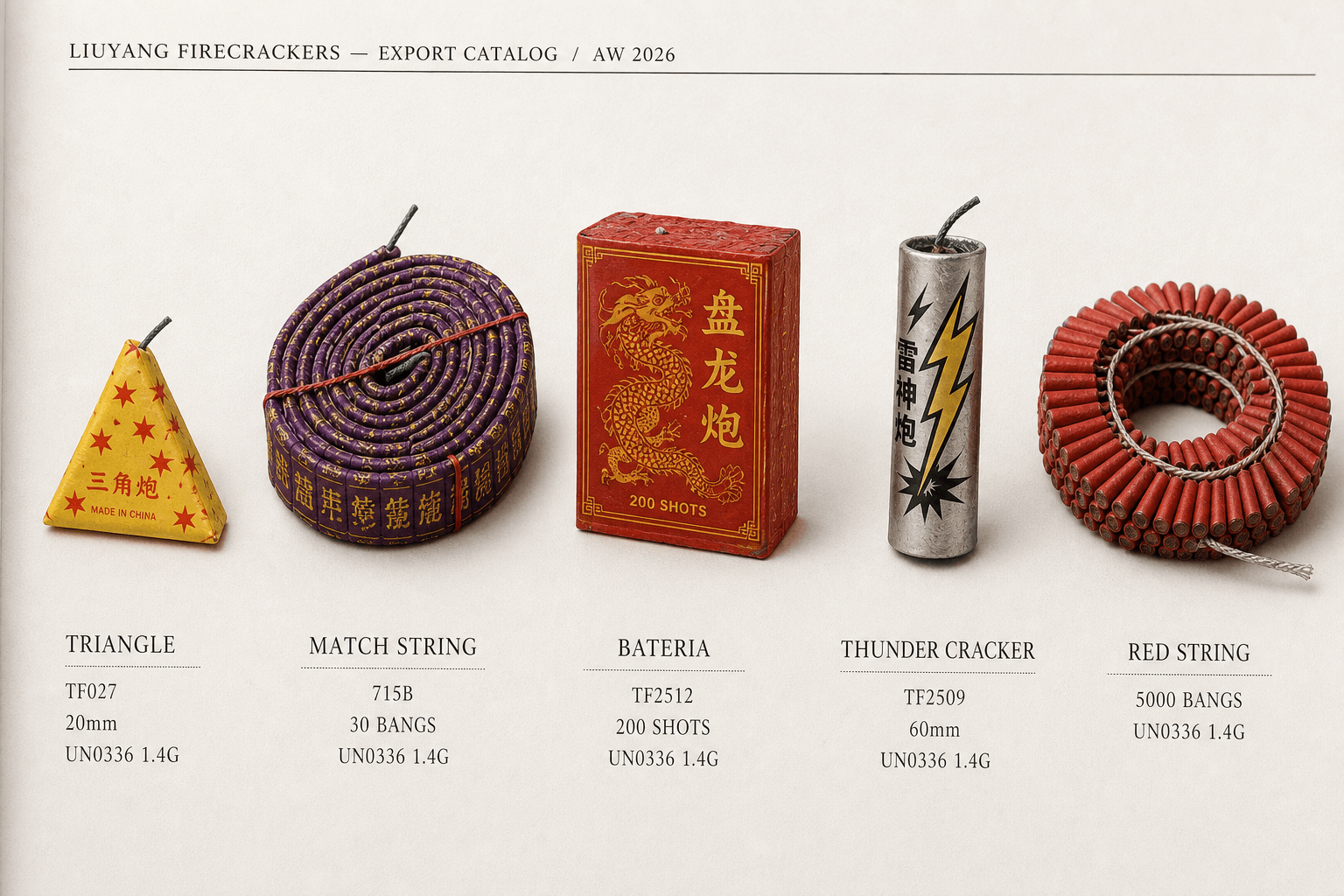
It covers what a Liuyang firecracker actually is, the build families on a real factory sheet — Triangle, Football, Bird Egg, Pili, Spanish, Thunder, Bateria and Match Cracker — plus realistic FOB ranges and the compliance routes that decide whether a container clears or sits in a yard.
What a Firecracker Actually Is
Strip the wrapper and a firecracker is simple: a paper or thin cardboard tube, sealed with a clay or paper plug at each end, packed with a measured charge of flash powder (modern) or black powder (heritage, still used for some traditional formats), with a single safety fuse pressed into the top. Light the fuse, the burn front reaches the powder, the gas expansion exceeds the tube wall's confinement strength, and the tube ruptures with a sharp single bang. There is no projectile. There is no aerial star. A firecracker that throws something into the sky has crossed into a different category — that's a mine, or the lift charge of a small shell.
Composition is what decides the bang. Flash powder (potassium perchlorate plus aluminum, sometimes with sulfur) gives the sharp, high-decibel report that consumer markets associate with the word "firecracker." Black powder (saltpeter, charcoal, sulfur) gives a softer, lower thump and is what traditional Liuyang strings still use for the heritage red-paper format that travels into temples on Lunar New Year morning. The same town builds both. For how these two powders differ across every kind of firework — not just crackers — see black powder vs. flash powder.
Because nothing leaves the device, consumer firecrackers carry one of the smallest hazard distances in the entire pyrotechnic catalog. The trade-off is acoustic: a single Bateria string can exceed 130 dB at one meter, which is what puts firecrackers in a different regulatory bracket from the silent end of the consumer assortment in some European markets.
The bamboo joint was sealed at both ends, gunpowder was packed inside, the joint was thrown into a fire, and the report drove away the mountain demon Shan Xiao. From that day, the people of Liuyang made the bang to greet every season.
— Liuyang local chronicle, attributed to the Li Tian tradition (Tang dynasty, c. 7th century)The Build Families You'll See in a Liuyang Catalog
On a real Liuyang factory sheet, "firecrackers" is not one product. It is roughly five distinct build families, each engineered for a different use case, retail price band and destination market. Most buyers see them mixed in a category sheet without noticing the build family is the variable that decides everything about packing density, bang count, NEC budget and shelf appeal.
| Build Family | Format & Size | Bang Profile | Typical NEC / device | Tier |
|---|---|---|---|---|
| Single-Bang Cracker | 20–35 mm tube, individual | 1 sharp report | 50 mg – 1 g | Consumer (F2 / 1.4G) |
| Thunder Cracker (M-class) | 40–60 mm tube, individual | 1 deep report, low-frequency | 2–6 g | Consumer / Display (F3 / 1.4G or 1.3G) |
| Match Cracker String | Fused string, 8–500 bangs | Rapid sequence, 0.05–0.1 sec gap | 0.05–0.5 g per cracker | Consumer (F2 / 1.4G) |
| Red String / Heritage Cracker | Hanging string, 1,000–10,000+ bangs | Continuous roar, 60–300 sec | 0.05 g per cracker | Cultural / restricted markets |
| Bateria / Compound Cracker | Cardboard bundle, 50–400+ shots | Sequenced bangs + color/whistle | 30–500 g total | Display / F3 (1.4G) |
The single-bang cracker is the entry product — Triangle Crackers (TF027), Football Crackers, Bird Egg Crackers — packaged in printed retail boxes and sold by the dozen. The Bateria is the hero product for Iberian-tradition markets: Mexico, Brazil, Spain, Portugal and most of Catholic Latin America stage village festivals around a 200-shot Bateria that fires for 30–60 seconds. The red string format is the cultural product that anchors Chinese New Year volume across Asia and the diaspora.
Effect Families Worth Carrying
A serious Liuyang factory carries 25 to 50 active firecracker SKUs across the five build families. They cluster into four effect families. A retail assortment usually only needs three.
Pure Bang — Flash Powder Singles
The classic firecracker effect. No color, no whistle, no flash visible — just the report. These are the SKUs that usually move in the highest unit volume, because they can be built around the stricter NEC limits used in many consumer fireworks markets — including the US 50 mg cap under CPSC 16 CFR 1507, when the item is specified and tested for that market.
Heavy Concussion — Thunder & M-Class
Larger tubes, more flash powder, deeper bang. NEC ranges from 2 g to the upper edge of the consumer line. These are restricted in the US consumer market but are the workhorse SKUs for Latin America, the GCC and most of Southeast Asia — the Iberian-format Spanish Cracker is the one buyers in Spain and Portugal ask for by name.
Moving Crackers — Spinners & Jumpers
Crackers with a tilted nozzle that throws the device along the ground. Gives the audio of a string cracker plus an unpredictable visual on the pavement — a strong novelty seller for Chinese New Year street trade and Diwali markets, and a natural add-on to the broader Match Cracker spinner family.
Compound & Sequence — Bateria, Color Thunder, Mandarin
The largest format we ship. The Bateria bundles 50–400 fused tubes in a single carton that fires in rapid sequence; Colour Thunder Flower and the Double Colour variant add a star or color flash to each bang. These are the SKUs that anchor an FOB quote for any Latin American or Iberian customer.
Rule we use when building a firecracker assortment for a new market: one single-bang SKU + one heavy-concussion SKU + one Bateria or string format covers 80% of consumer demand. Add a moving cracker (Jumping Frog or Ground Mouse) for novelty appeal and the category sells itself, even alongside aerial cake. Match the heavy-concussion choice to local NEC limits — that single decision keeps the container moving through customs.
Featured Series from the Liuyang Catalog
A snapshot of the firecracker SKUs we ship most often — built and packed in our own factory in Chengchong Town and bundled into mixed containers across the wider Liuyang fireworks product range. The full Firecracker category sits at category 2 of our wholesale catalog and connects directly to the rest of the consumer sheet through the complete category guide.
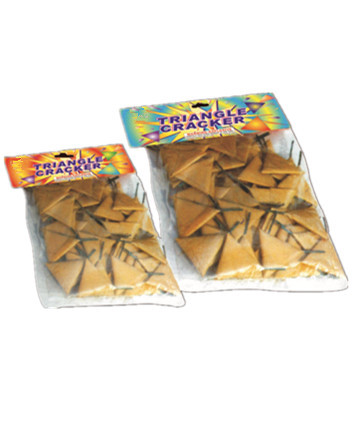
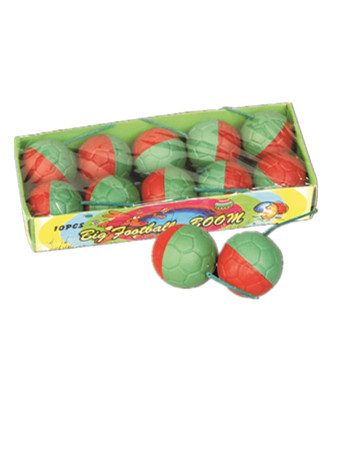
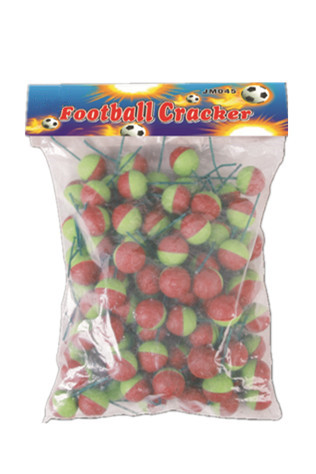
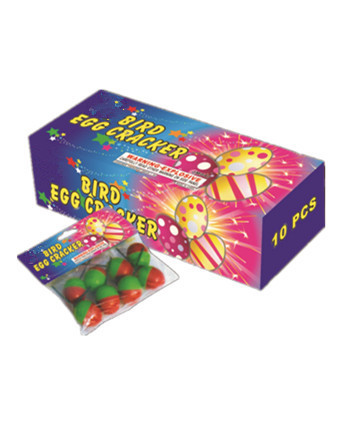
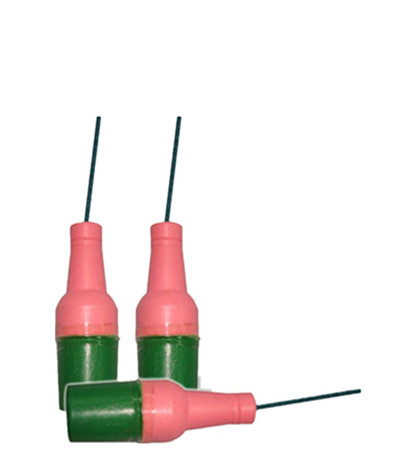
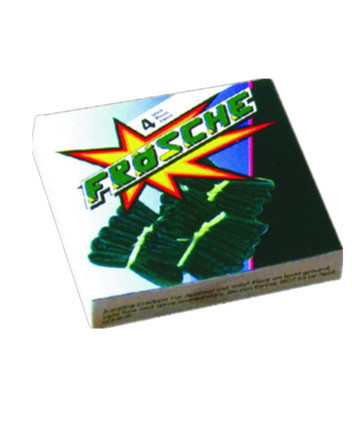
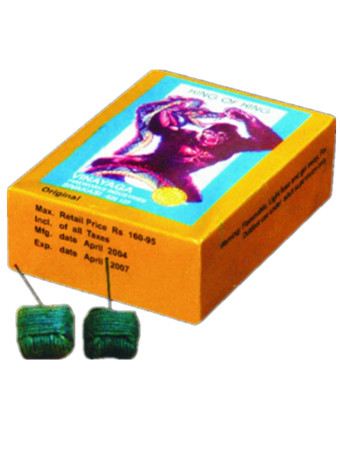
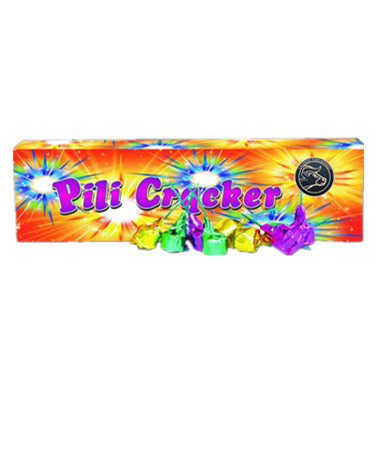
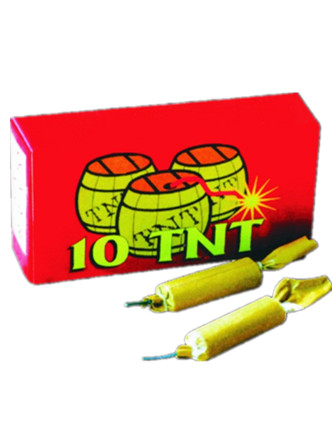
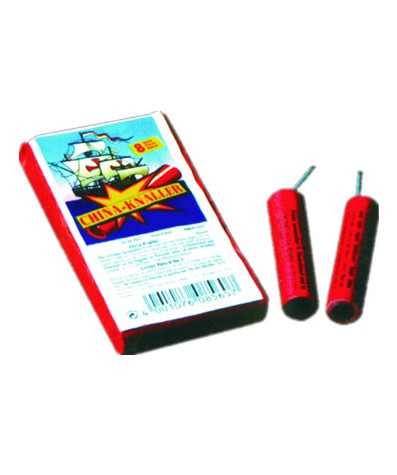
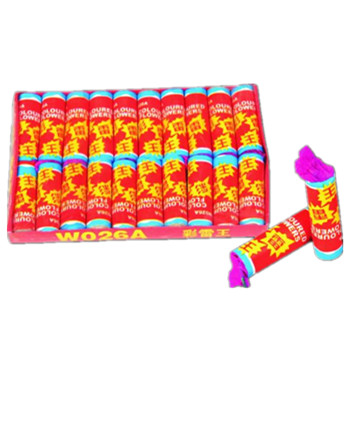
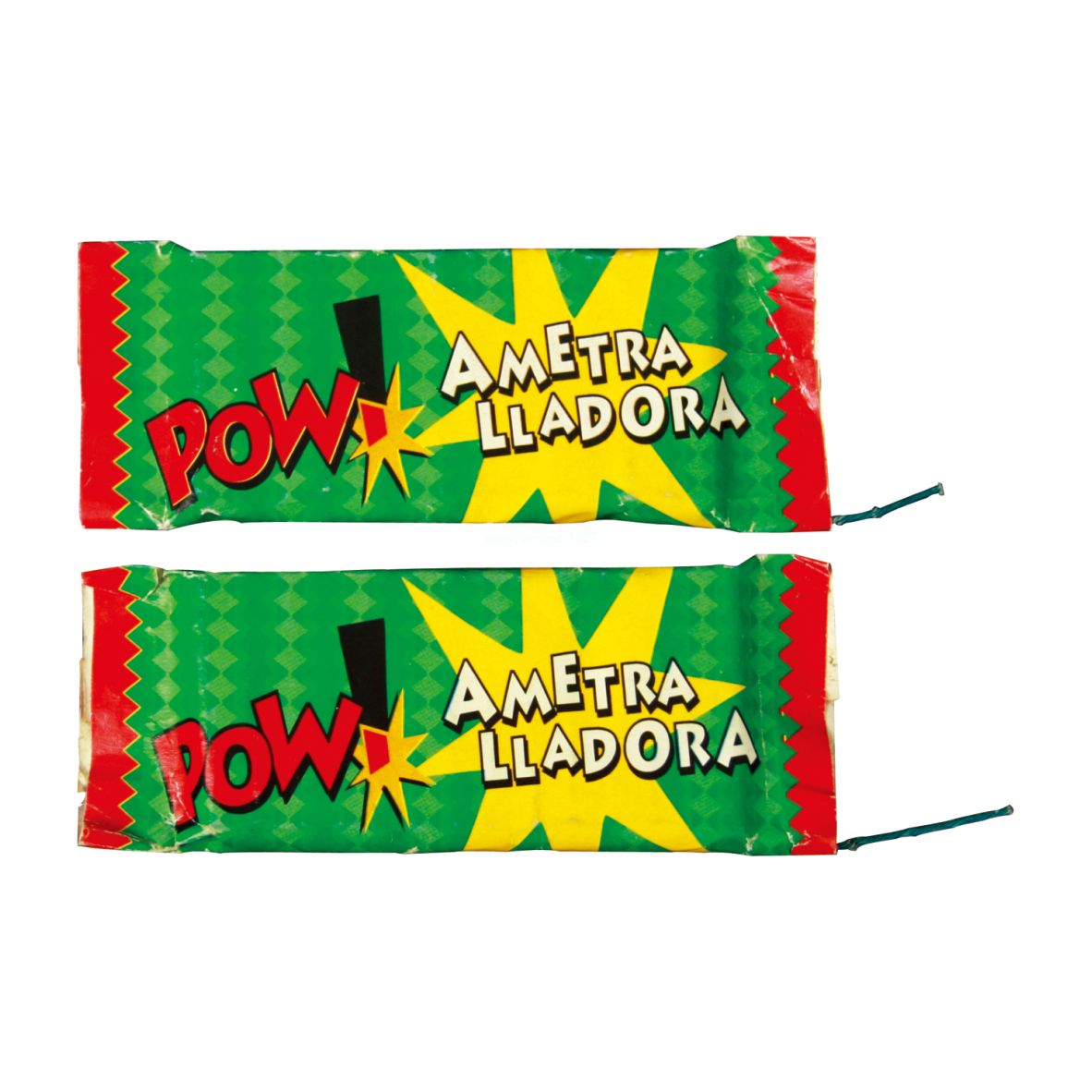
Beyond the standard catalog, our match cracker workshop also runs 1#, 2#, 3# and 8# match cracker formats in 2, 3, 4, 5, 6, 8 and 9-bang configurations, plus shaped novelty crackers (Mickey Mouse, Pirate Ship, Black Spider). Those sit on a separate sheet because the printed character licensing changes by destination market — ask for the match cracker addendum when you request a quote.
Telling a Good Firecracker from a Bad One
Firecrackers fail in three places. After unpacking a few cases of cheap product, you stop reading the wrapper and start checking these three.
- Tube wall thickness and end-plug seating. A thin-walled or under-plugged cracker can rupture sideways instead of producing a clean report — that's the failure that throws a fragment at chest height. A premium Liuyang cracker uses 2–4 mm rolled kraft with a hardened clay or paper plug pressed flush at both ends. Squeeze a sample between thumb and finger; it should not give.
- Fuse seating and burn rate. The fuse should be pressed into the top plug at least 4 mm and protrude at a consistent length out the top. A loose fuse is the most common reason cheap crackers fizzle — the burn front never reaches the powder. Test a sample: a Liuyang green-fuse cracker should burn 3–5 seconds before the report, predictably, every time.
- Composition consistency across the box. Every cracker in the same SKU should produce the same report at the same volume. A box where some crackers fizzle, some pop softly and others over-bang was filled with unweighed scoops, not by an automated press. This is the most common QC defect on cheap product, and it's instantly audible during a test fire — the wider firing-line checklist sits in our guide to spotting high-quality fireworks.
Test-fire at least one full box from each SKU before signing off on a pallet — and hold a phone with a decibel app at a fixed distance. A clean Liuyang single-bang cracker produces a report within ±3 dB across the box. A batch where readings range 15+ dB is a process failure, not a bad meter. That's the test that catches a cheap supplier in 90 seconds.
How Firecrackers Compare to Cakes, Candles & Fountains
Firecrackers are the loudest, oldest and lowest-cost product on the consumer shelf. They win on cultural fit, price-per-unit and the markets where the bang is the entire point.
| Format | Effect Profile | Hazard Distance | Strongest Markets | FOB Range (per unit / device) |
|---|---|---|---|---|
| Single-Bang Cracker | 1 sharp report | 3–5 m | Sells almost everywhere | $0.005–0.05 |
| Thunder Cracker (M-class) | 1 deep concussion | 6–10 m | Latin America, GCC, SEA | $0.10–0.40 |
| Bateria / Compound | 30–60 sec sequenced bang | 10–15 m | Mexico, Iberia, Brazil, Philippines | $3.00–18.00 |
| 200g Multi-Shot Cake | 15–25 sec aerial | 20–25 m | Sells everywhere | $1.00–3.00 |
| Roman Candle (1.75") | 20–30 sec aerial | 15–20 m | Most consumer markets | $0.40–0.80 |
| Cylindrical Fountain | 60 sec ground | 5–8 m | Sells everywhere | $0.60–1.80 |
For the cake side of the assortment, see the 200g and 500g multi-shot cake guide; for the candle side, the Roman candle buyer's guide covers calibers and effect families; for the silent end of the consumer shelf, the fountain fireworks guide handles ground-only product. The single break that defines aerial pyrotechnics — and traces back to the same Liuyang flash-powder lineage — sits in the chrysanthemum shell fireworks guide.
Why Firecrackers Still Carry the Calendar in Half the World
European retail conversation has shifted toward color, height and quiet — silent fountains, smokeless cold spark, low-noise cakes. That conversation has not happened in most of the world. A large share of global firecracker demand is still cultural, and much of that demand runs through traditional cracker formats.
- Chinese New Year. Hong Kong, Singapore, Malaysia, Thailand, Vietnam, the Philippines, plus the Chinese diaspora across the Americas, Australia and the UK. The 15-day window from New Year's Eve to the Lantern Festival is consistently one of the strongest seasonal drivers for our firecracker orders.
- Diwali, Holi and Indian wedding season. India's domestic Sivakasi industry is large, but premium Bateria and large-NEC string crackers are still imported from Liuyang for the upper end of the wedding and corporate market.
- Latin American Fiestas Patrias and church festivals. Mexico's village patron-saint fiestas, Brazilian Festa Junina, Chilean Fiestas Patrias and Argentinian Reyes Magos — every one of these is built around a Bateria. Iberia (Spain and Portugal) runs the same format under the Mascletà tradition.
- GCC weddings, Eid and National Day. Saudi Arabia, UAE, Qatar, Kuwait — large weddings still close with a Bateria sequence, and National Days run heavy on string crackers and Thunder Crackers.
- Southeast Asian Lunar and harvest festivals. Tet in Vietnam, Songkran in Thailand, the full Indonesian and Philippine festival calendar.
In each of these markets, firecrackers are not a discretionary product. They are part of the ritual — and that buys them a structural floor in the demand curve that no aerial product enjoys.
Sourcing Wholesale from Liuyang
Pricing & MOQ
Typical FOB ranges out of Liuyang for export-grade firecrackers:
- Triangle, Football, Bird Egg singles — $0.005–0.05 per cracker, sold in retail boxes of 12/24/60
- Match cracker strings (8–500 bangs) — $0.20–2.50 per string, depending on bang count and tube grade
- Thunder Cracker, Pili, King of King, Spanish Cracker — $0.10–0.40 per cracker
- Bateria / compound crackers (50–400 shots) — $3.00–18.00 per device
- Heritage red string (1,000–10,000 bangs) — $1.50–22.00 per string, by length
- Shaped match crackers (Mickey, Pirate Ship, Black Spider) — $0.50–1.80 per piece
MOQ is one mixed 20GP — roughly 800–1,200 cartons of fireworks, of which 100–250 cartons can be firecrackers. Firecrackers pack densely (no air space inside the tube) and have a high revenue-per-CBM ratio, so they're often the most profitable filler on a mixed container loaded mostly with cake. Most factories will not split a container for firecrackers alone — combine with cake, candle and fountain volume.
Compliance & Hazard Class
- EU (F2 / F3) — EN 15947 certificate, CE mark on every retail package, safety text in the destination language. Most consumer single-bang and string crackers land in F2; Bateria and large Thunder Crackers sit in F3. Several EU members (Germany, Italy, Netherlands) restrict aerial sale windows but still allow ground crackers under their wider F2 framework — confirm the local permit before quoting.
- US (CPSC / DOT) — 16 CFR 1507 caps consumer firecrackers at 50 mg pyrotechnic composition per item, with a 130 dB ceiling at 1 m and no metallic perchlorate fuel. Triangle, Football, Bird Egg and smaller Match Cracker formats can be built for this route when the NEC, label and test report are specified up front; M-80, M-1000 and many Thunder Cracker formats are display-only (1.3G, ATF Type 54) and not for retail.
- UN classification — Many consumer firecracker formats ship under UN0336 (1.4G), in the same hazard class as cakes, fountains and candles. Larger Bateria and high-NEC strings may be classified as UN0335 (1.3G) on the formal test report, which triggers higher DG surcharges and a different vessel acceptance list. Confirm classification before booking — a misclassified container is the most expensive shipping mistake on this category.
- Latin America & GCC — Many Latin American import routes admit firecrackers under a general fireworks import permit issued by bodies such as DGMN in Chile, SEDENA in Mexico or the Federal Police in Brazil; rules and product caps still vary by country and update annually, so confirm with the local importer. GCC markets follow the GDCD/Civil Defence framework — see the Middle East fireworks import hub for the country-by-country GCC compliance map.
- China export side — export shipments out of Liuyang should be supported by CIQ inspection records, a UN classification matching the Dangerous Goods Declaration, and the destination-market approval that applies, such as a US DOT EX number.
The single most expensive mistake on a firecracker container is NEC mis-declaration. A Bateria declared as 1.4G (UN0336) but tested closer to 1.3G (UN0335) at the destination port is a reclassification event — the container can sit for 30+ days while paperwork is corrected. Always ask your factory for the current classification test report on every Bateria and high-NEC string SKU before booking the vessel slot.
Why Liuyang on This Category Specifically
Firecrackers look like the simplest firework on the planet. They are also the fastest to make badly. Composition has to be pressed at the right density, the powder weight per tube has to fall inside a 5% tolerance, the end plugs have to seat on dry tubes, and the fuse has to be timed to the same burn rate across the whole batch. Every step has a window. Liuyang has the local ecosystem to keep all those windows tight: kraft tube mills, clay plug suppliers, automated powder dosing lines, fuse extruders, and on-site CIQ test firing — all within the same industrial cluster around Chengchong Town.
And then there is the heritage. The Li Tian temple in Dayao Town, twenty minutes from our factory, is the patron shrine of the entire industry — every Liuyang fireworks worker visits at least once a year. The technique that monk pioneered in the 7th century is the same technique we still teach apprentices in 2026: pack the tube, press the plug, time the fuse, test the bang. The full Liuyang fireworks history traces the line from Li Tian forward; the wider history of fireworks places the firecracker at the root of every aerial product that came after. Every chrysanthemum shell, every 500g cake, every cold-spark stage device on the planet is a descendant of the bang Li Tian made in this valley.
FAQ
What is a firecracker, exactly?
A small paper or cardboard tube packed with flash powder or black powder, sealed at both ends, with a single fuse on top. The fuse reaches the powder, the tube ruptures, you get a sharp bang. Modern consumer firecrackers run from 20 mm Triangle Crackers up to 60 mm Thunder Crackers and Bateria. Anything that uses a projectile or generates aerial stars is no longer a firecracker — it has crossed into the cake, candle or shell category.
Are Liuyang firecrackers legal in the United States and the EU?
Partially. The US caps consumer firecrackers at 50 mg under CPSC 16 CFR 1507 — Triangle, Football and small string formats can be built for that route when the NEC, labeling and test report are specified correctly; M-class and many large Thunder Cracker formats are display-only. The EU caps F2 single-bang devices at 6 g NEC under EN 15947; Bateria is usually quoted for F3 markets where local rules still allow it. The strongest demand for Liuyang firecrackers is usually in Latin America, the GCC, Southeast Asia and the Chinese diaspora — markets where higher-NEC string and Bateria remain part of traditional celebrations.
Why is Liuyang considered the birthplace of firecrackers?
Tang-dynasty records and Liuyang local histories credit the monk Li Tian (李畋), born in Dayao Town in present-day Liuyang around 601 CE, with sealing gunpowder inside a bamboo tube and inventing the first firecracker. The technique never left. The same town today still produces roughly 60% of the world's fireworks supply, and a Li Tian temple in Dayao is the de facto patron shrine of the entire industry.
What is the difference between a firecracker, a Thunder Cracker, and a Bateria?
All three are flash-powder devices, but the form factor differs. A firecracker is a single-bang tube, usually 20–35 mm. A Thunder Cracker (M-class) is a larger single-bang device, 40–60 mm, with several grams of flash composition for a deeper concussion. A Bateria (Mandarin Cracker, compound cracker) is a multi-shot bundle — dozens to hundreds of fused tubes packed in a single carton — that fires in rapid sequence. The Bateria is the format Latin American and Iberian markets ask for by name.
Can firecrackers ship in the same container as cakes and roman candles?
Yes — and they should. Consumer firecrackers ship under UN0336 (1.4G), the same hazard class as cakes, roman candles, fountains and sparklers. The standard MOQ is one 20GP mixed, with 100–250 cartons of firecrackers alongside cake and roman-candle volume. Watch the larger Bateria and high-NEC strings — they can be reclassified into UN0335 (1.3G) at destination, which triggers higher DG surcharges. Always confirm classification on the test report before booking.
Firecrackers & Bateria — Factory-Direct from Liuyang
40+ active firecracker SKUs, from Triangle and Football singles to 400-shot Bateria for Latin America and the GCC. Send your destination market and SKU mix and we'll quote it FOB, with the right NEC band and CE/CPSC compliance route lined up before the booking.
WhatsApp Email