The rocket (火箭 / 窜天猴) is the firework most adults remember from childhood — a single stick, one fuse, and a quick aerial bang for almost no money. It is also the category that has changed the most in the last twenty years. Stick rockets are now banned outright in most of Europe and a long list of US states; the same effect has migrated into stickless missile batteries — Saturn Missiles, Jupiter Missiles, Moon Travellers — which are still legal almost everywhere a 1.4G consumer cake is.
This guide is for buyers sourcing rocket fireworks wholesale from China. It covers the five build families a Liuyang export factory actually ships, where each one still pays rent on a retail shelf, and the compliance route that decides whether your container clears customs.
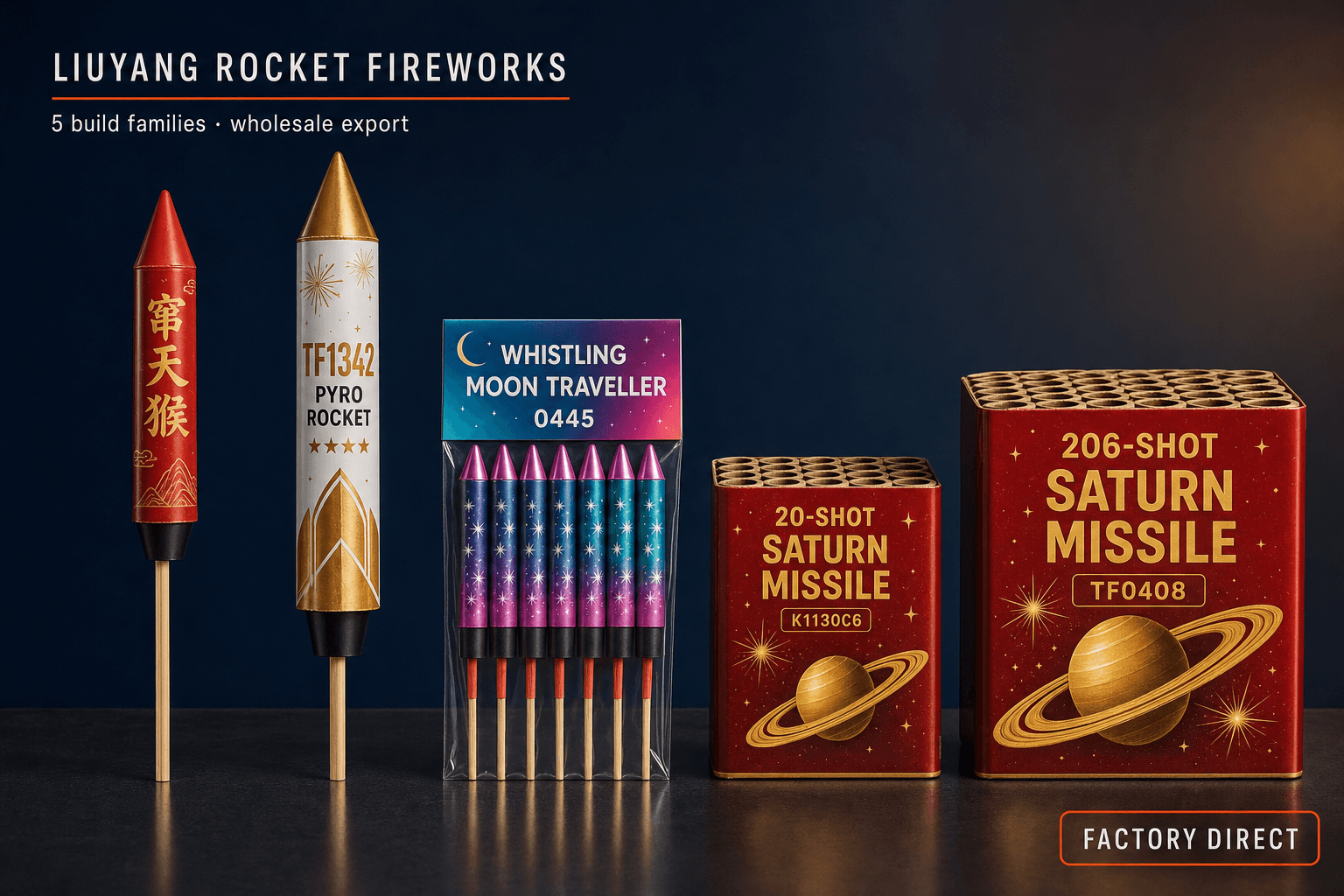
What a Rocket Actually Is
Strip the wrapper away and a traditional rocket is three pieces: a motor tube packed with black powder propellant, a small aerial effect head on top (a star, a comet, or a tiny shell), and a guide stick that keeps it pointing up while it climbs. Light the fuse, the propellant burns downward and out, the rocket climbs 30 to 80 metres on its own thrust, and the head ignites at apogee. No mortar, no rack, no setup time.
That is why rockets stayed on the consumer shelf for so long. They are the cheapest aerial effect a factory can make — bottle rockets sit at the floor of any rocket FOB list, typically single-digit cents per piece, with the exact figure depending on stick length, packaging and order volume — and the only firework a kid can light, run, and watch from ten metres away. Multi-shot cakes have replaced rockets in the professional market because cakes are safer to crew and easier to programme, but on the consumer side, in markets where they are still legal, rockets continue to move in serious volume.
The Five Build Families on the Liuyang Export Shelf
Buyers usually ask for "rockets" and end up looking at a category the factory has split five ways. The five build families below cover almost everything we ship out of Liuyang under category 8 of the wholesale catalog — Rocket & Missiles.
1. Bottle Rockets (窜天猴) — The Classic Single-Stick
The smallest, cheapest aerial firework on earth. A 6 mm motor tube, a 25–35 cm bamboo stick, a tiny report or whistle head. Single shot, one bang, lifts to 20–30 metres. In Mexico, Brazil, the Philippines, parts of Southeast Asia and a number of US states, the bottle rocket is still the volume seller during fiestas and weddings — packed in 12 / 144 / 1,440-piece bricks, sold at street markets by the bundle.
Banned across the entire EU under EN 15947, banned in the UK, Australia, Canada and several US states. Always check the destination list before quoting a container.
2. Stick Rockets — The Single Comet or Mini-Shell
A bigger version of the bottle rocket. Motor tube goes from 6 mm up to 30 mm; the head carries a real aerial effect — colour comet, crackle, mini-shell with break. Heights of 40–80 metres are routine. The Liuyang stick-rocket SKU range covers the cheap end (T0508, T0512), the colour-comet middle (TF1338 Beautiful Space, TF1341 Multicolor Rocket, TF1339 Fan Style) and the premium end (TF1342 Pyro Rocket, TF1343 Victory, TF1344 East West Rockets).
Same ban list as bottle rockets in the EU, UK and Australia. Still sells in the US (state-by-state), Mexico and Latin America.
3. Moon Travellers (Whistling Rockets) — The Sound Layer
A stick rocket where the motor itself burns whistle composition — a screaming high-pitch climb instead of a silent thrust. Whistling Moon Travellers (0445) ship in fanned bundles of 10 and pack a wall of sound that no cake or candle can replicate. Best-seller in markets where noise rules still allow it: Latin America, much of the Middle East, Southeast Asia.
4. Stickless Missile Batteries — The Modern Replacement
The category that has eaten the rest of the rocket market. Short whistling-propellant tubes are glued into a cardboard block and chain-fused; they fly on propellant geometry alone — no falling stick. From the Liuyang catalog: 20-Shot Saturn Missiles (K1130C6), 100-Shot Saturn Missiles (K1130C12), 25S / 100S Jupiter Missiles (0449), 12S Big Saturn Missiles (TF0407) and the flagship 206-Shot Saturn Missiles (TF0408).
Because the stick is gone, missile batteries pass EN 15947 in markets where stick rockets fail. They are also easier to ship — no protruding sticks means tighter cube utilisation per carton. For most buyers in the EU, UK and regulated US states, this is the only "rocket" SKU that still books.
5. Display Missiles — The 4″ / 10″ / 11″ Tier
Single-shot stickless rockets in shell-tier calibres. Our 4" Missile (TF0404), 10" Missile (TF0406) and 11" Missile (TF0405) are display-grade SKUs — apogee 80–150 metres, full break head, sold by the carton to licensed display operators in Latin America and the Middle East. Double Boom (W539) is the same idea with a salute charge. These cross into UN0335 / 1.3G display territory; not a consumer SKU.
The rule we use when building a rocket assortment for a mixed container: missile batteries 60%, stick rockets 25%, bottle rockets 10%, display missiles 5%. Skews toward stick and bottle rockets in Mexico and Latin America; almost pure missile batteries for the EU and regulated US states.
Specifications, Heights and FOB Ranges
Effect names sell the shelf, but the factory works in motor diameter, total NEC and shot count. The figures below are indicative export-grade ranges from our Chengchong Town production — useful for early sourcing decisions and order budgeting, but every quote ships with a current SKU-level spec sheet, so request that sheet before you finalise pricing or pack-out.
| Build Family | Motor / Bore | Apogee | Shot Count | Tier | FOB Range |
|---|---|---|---|---|---|
| Bottle Rocket (窜天猴) | 6 mm motor | 20–30 m | 1 shot | Consumer (1.4G) | $0.03–0.08 / pc |
| Stick Rocket | 10–30 mm motor | 40–80 m | 1 shot | Consumer (1.4G) | $0.30–1.50 / pc |
| Whistling Moon Traveller | 14 mm motor | 50–70 m | 10 sticks / pack | Consumer (1.4G) | $1.20–2.50 / pack |
| Saturn Missiles 20S (K1130C6) | 14 mm tubes | 30–45 m | 20 shots | Consumer (1.4G) | $1.50–2.80 / battery |
| Saturn Missiles 100S (K1130C12) | 14 mm tubes | 40–55 m | 100 shots | Consumer (1.4G) | $5.00–9.00 / battery |
| Saturn Missiles 206S (TF0408) | 20 mm tubes | 50–70 m | 206 shots | Display (1.3G) | $18–32 / battery |
| 4″ Display Missile (TF0404) | 4″ bore | 80–110 m | 1 shot | Display (1.3G) | $5–12 / pc |
| 10″ / 11″ Missile | 10″–11″ bore | 120–150 m | 1 shot | Display (1.3G) | $25–60 / pc |
The single biggest cost driver is not the shot count — it is the propellant and the wrapper. A 100-shot Saturn battery built with whistle composition runs noticeably higher per unit than the same battery built with plain black powder; whistle binder is a tightly regulated raw material in China and adds extra QC steps to the production cycle. Ask for the BOM if the exact premium matters to your costing — it varies lot by lot with current raw-material prices.
Featured SKUs from the Liuyang Catalog
A snapshot of the rocket and missile SKUs we ship most often — built and packed in our own factory in Chengchong Town and bundled into mixed containers across the wider Liuyang fireworks product range alongside multi-shot cakes, roman candles, sparklers and firecrackers.
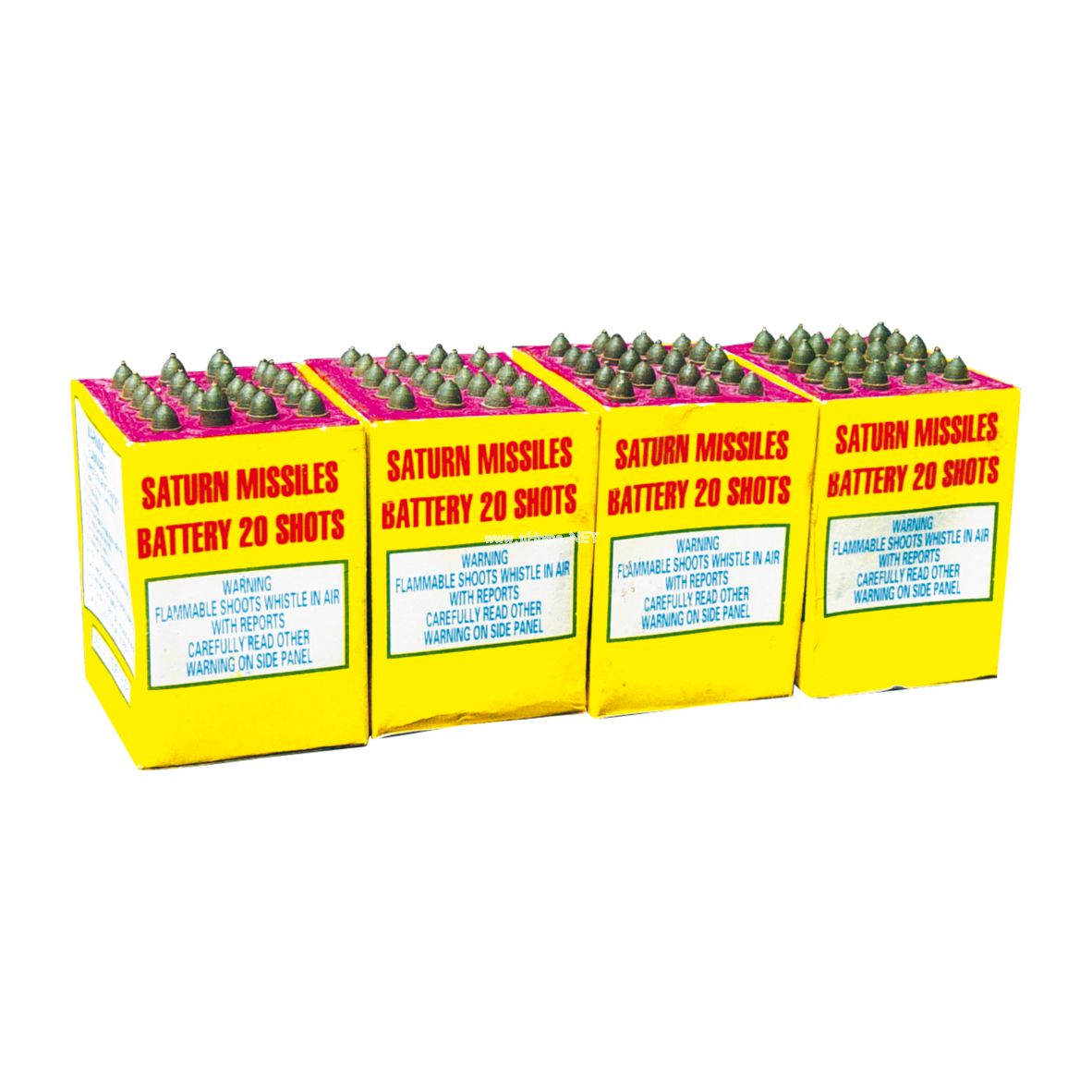
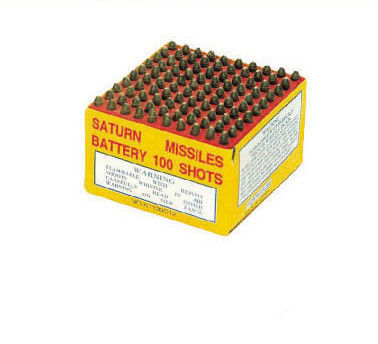
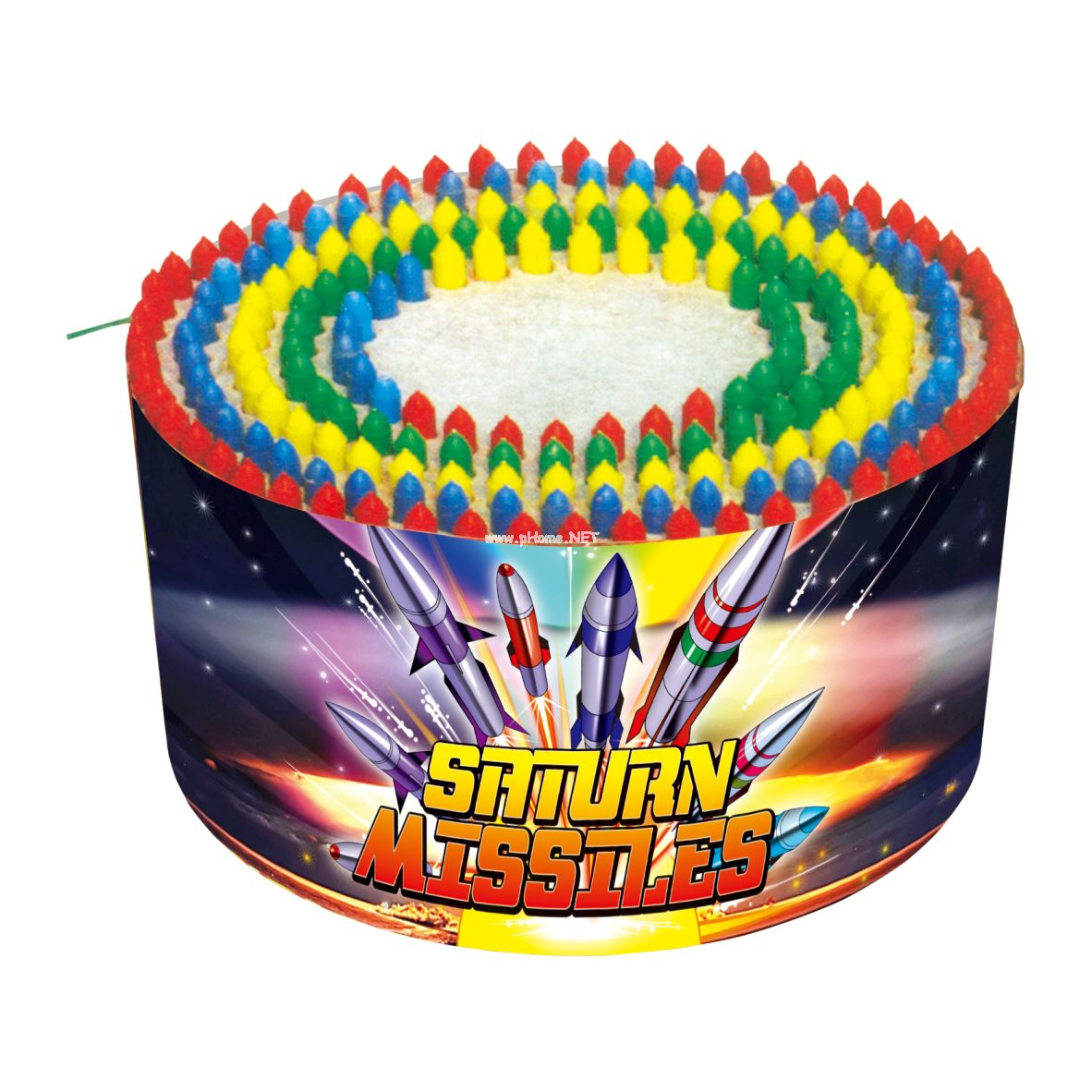
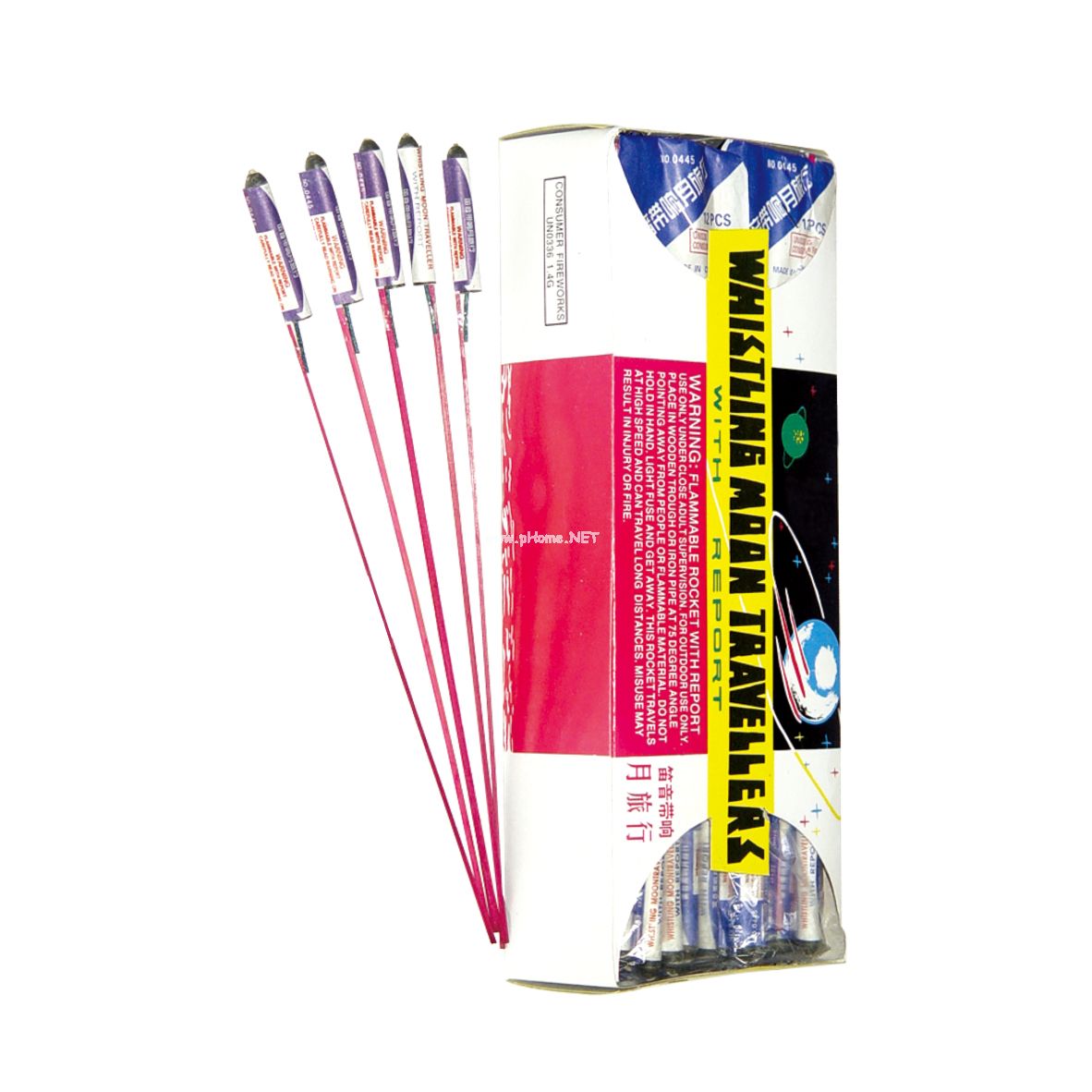
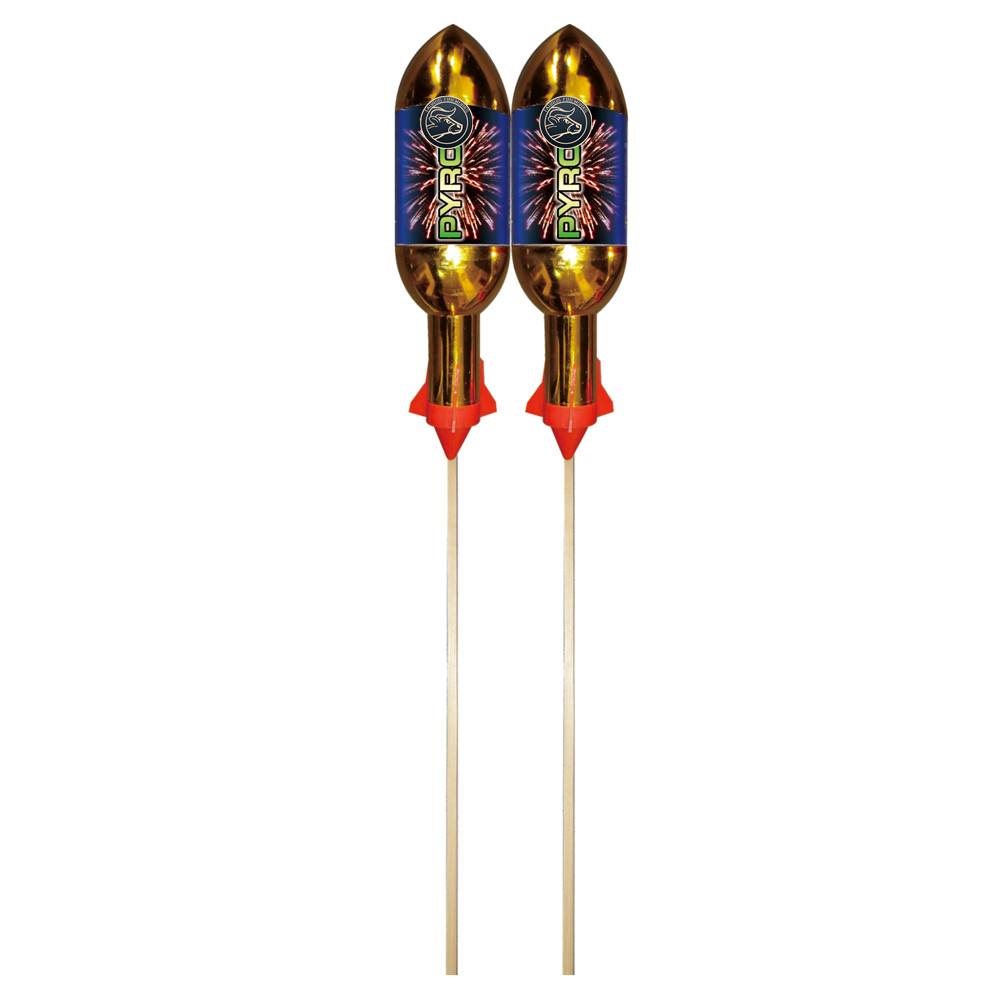
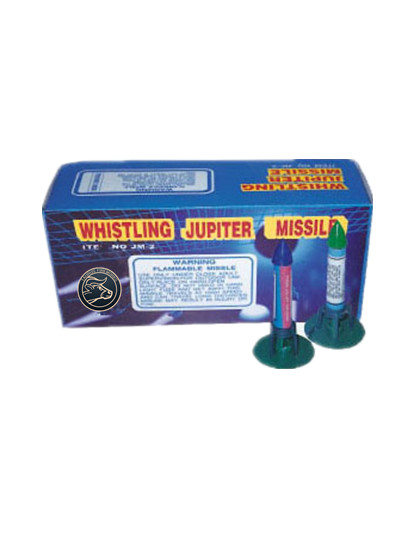
The full SKU list — including 4" Missile (TF0404), 10" Missile (TF0406), 11" Missile (TF0405), 12S Big Saturn Missiles (TF0407), Double Boom (W539) and the Beautiful Space / Multicolor Rocket / Fan Style / Imagine / Victory / East West Rockets stick-rocket family — sits inside category 8 of our global wholesale catalog.
Where Rockets Are Banned, Restricted or Still Free
More than any other firework category, rocket sourcing is a destination problem first and a product problem second. The legal status changes ban-list by ban-list, and quoting the wrong SKU into the wrong country is the fastest way to lose a container at the port. The snapshot below reflects the position as of 2026 — every entry is directional and should be verified against the current rules of the destination country, state or emirate before you book.
| Market | Bottle Rockets | Stick Rockets | Missile Batteries |
|---|---|---|---|
| EU (EN 15947) | Banned | Banned in most member states | Allowed (F2/F3, CE marked) |
| United Kingdom | Banned | Banned | Allowed (F2/F3) |
| United States | Legal in many 1.4G states (e.g. TX, MO, SC, KS); banned or restricted in others (e.g. CA, MA, NJ, NY, AZ, IA) — verify current state list | Generally tracks bottle-rocket rules — verify by state | Generally accepted in 1.4G states; verify local fire-marshal rules |
| Mexico & Latin America | Volume seller | Volume seller | Growing fast |
| Australia / New Zealand | Banned | Banned | Pro-only / restricted |
| Middle East / GCC | Restricted, market-dependent | Restricted, market-dependent | Allowed under SABER / DCD |
| Southeast Asia | Volume seller in PH, TH, ID | Volume seller | Allowed |
The single takeaway: when the destination is the EU, UK, Australia or a regulated US state, quote the assortment as missile batteries only. When it is Mexico, Latin America or Southeast Asia, the full bottle / stick / battery mix still books. Skip the guesswork — our GCC compliance hub and distributor's guide for the Middle East & Latin America spell out the per-country paperwork.
Telling a Good Rocket from a Bad One
Rockets fail in three places. After firing a few cases of product, you stop reading the wrapper and start reading these three.
- Stick attachment. On stick rockets, the bamboo stick is glued and bound to the motor tube with a strip of kraft paper. A loose stick means the rocket leaves the launcher at an angle — best case it lands sideways, worst case it goes through a window. Hold the stick, lift the rocket: if there is any wobble at the joint, reject the lot.
- Motor tube wall thickness. Cheap rockets vent sideways or split at the base. Premium Liuyang motors use rolled kraft 2.5–4 mm thick, plugged with a hardened clay nozzle. On a missile battery, also check the chain fuse — it should sit clean across all tubes, not glued in a single hot lump.
- Head ignition timing. The head is supposed to ignite at the top of the climb, not at three metres. Time fuse cut to the wrong length is the classic failure on cheap rockets — the effect either fires on the ground or simply burns out without a break. Test-fire three samples from any new SKU before you sign off on a container.
The single biggest visible quality marker on a Saturn / Jupiter missile battery is the fuse-tube interface. On a premium Liuyang battery, the chain fuse is laid into a routed channel and covered with a paper strip — no glue blob, no fuse loops sticking out. If the chain looks like cooked spaghetti, the factory has cut a corner that will cost you on the firing line.
How Rockets Compare to Cakes and Candles
Rockets are not the brightest, the longest or the highest aerial product on the shelf. They win on price-per-aerial-shot and on the audio mix that whistles add to a programme.
| Format | Sky-Time | Audio | Setup | FOB Range |
|---|---|---|---|---|
| Bottle Rocket (1 shot) | 1–2 sec | Single bang | Bottle in the ground | $0.03–0.08 |
| Stick Rocket (1 shot) | 3–5 sec | Comet hiss + break | Bottle / wire rack | $0.30–1.50 |
| Saturn Missile Battery (100 shots) | 20–30 sec | Wall of whistles | Place & light | $5–9 / battery |
| 200g Cake (25–49 shots) | 15–25 sec | Mixed effects | Place & light | $1.00–3.00 |
| Roman Candle (8 shots) | 20–30 sec | Soft pop per shot | Angled rack | $0.40–0.80 |
For a full breakdown of how rockets sit alongside the rest of the consumer catalog, see the cake vs. shell fireworks cost and safety guide and the complete category guide.
Where Rockets Sell — Markets & Buyer Segments
No category on the shelf is as sharply split by geography as rockets, because the format that carries the volume in one region is banned outright in the next. Four buyer segments define the category.
- Latin America retail (the volume base) — Mexico and most of Latin America still sell the full stick-and-bottle-rocket range, and the screaming whistle layer is expected rather than optional. This buyer wants price-per-piece on bottle rockets and Whistling Moon Travellers by the case. The seasonal ordering side is in our Brazil Carnaval and Réveillon sourcing guide.
- Southeast Asia retail — parts of Southeast Asia still carry whistling stick rockets through festival windows, and here too the audio is the selling point. Market-by-market rules are mapped in our Southeast Asia fireworks market guide.
- Regulated markets — batteries only — the EU, UK, Australia, Canada and several US states have removed stick rockets from the shelf, so the entire rocket allocation for these buyers becomes stickless missile batteries. The segment is defined by compliance, and the country-by-country picture sits in the ban table above.
- Licensed display operators — the largest Saturn tiers, above roughly 100 shots, usually cross into UN0335 / 1.3G and ship almost exclusively to licensed display contractors in Latin America and the Middle East, not to retail.
The practical rule mirrors the whole category: pick the destination first, because it decides whether you are quoting a retail bottle-rocket program or a stickless-battery-only assortment before you ever get to price.
Sourcing Wholesale from Liuyang
MOQ & Container Build
MOQ is one mixed 20GP — roughly 800–1,200 cartons of fireworks, of which 50–200 cartons can be rockets and missile batteries depending on the destination. Most factories will not split a container for a single rocket SKU.
Compliance Documentation
- EU (F2/F3) — EN 15947 certificate, CE mark on every wrapper. Stick and bottle rockets are not exportable to most EU states; quote missile batteries only.
- US (CPSC/DOT) — 16 CFR 1507, APA 87-1, UN0336 / 1.4G. Bottle and stick rockets are state-by-state; missile batteries are generally easier to clear in 1.4G states, subject to local fire-marshal rules.
- Mexico & Latin America — UN0336 / 1.4G with SEDENA (Mexico) or DGMN (Chile) import permits. The full rocket assortment is still commonly sold across the region, with importer permits deciding the final scope.
- Middle East / GCC — UN0336 / 1.4G under Saudi SABER or UAE DCD. Missile batteries preferred, stick rockets restricted.
- China export side — every container ships with CIQ export inspection, the factory's safety production licence, and a UN classification (UN0333 / 0335 / 0336 / 0337) matching the Dangerous Goods Declaration. Destination-specific approvals, such as a US DOT EX number, are prepared for the market each container ships to, the same way we handle cakes and shells.
One operational note we wish more first-time buyers heard: missile batteries cube better than stick rockets. A 20GP loaded with stick rockets loses meaningful cube to the packing material around the protruding sticks, while a container of stickless batteries packs noticeably tighter — the exact gap depends on stick length, carton design and assortment, so ask for a stuffing plan before booking. Per dollar of freight, missile batteries often land cheaper than the FOB difference alone suggests.
Why Liuyang on This Category Specifically
Rockets and missile batteries are a propellant-chemistry product first, a wrapper product second. Liuyang's advantage is the local raw-material chain — kraft tubes, clay plugs, whistle and black-powder propellant, chain fuse and CIQ test firing all within the same industrial cluster. Whistle composition in particular is a tightly regulated raw material in China, and Liuyang's mature local supplier network keeps QC cycles short and lot-to-lot consistency tight. That is part of why a Liuyang Saturn battery tends to whistle cleaner than batteries assembled in less integrated regions.
FAQ
Are bottle rockets (窜天猴) still legal to import?
Depends entirely on the destination. As of 2026, banned outright in the EU, UK, Australia, Canada and several US states (e.g. CA, MA, NJ, NY, AZ, IA). Still legal and a volume seller in Mexico, most of Latin America, parts of Southeast Asia, and many US 1.4G states (e.g. TX, MO, SC, KS). State and country lists change every year — confirm with the current ATF guidance, state fire marshal or destination regulator before booking.
What's the difference between a rocket and a missile battery?
A rocket has a guide stick — propellant burns, stick stabilises the climb. A missile battery is stickless — short whistling tubes glued and fused into a cardboard block, flying on propellant geometry. Batteries are easier to ship, easier to use, and increasingly the only rocket format that still clears in regulated markets like the EU and the UK.
Why are so many countries banning stick rockets?
Two reasons. The stick is a falling-debris hazard — it returns to the ground at terminal velocity from 30–60 metres up. And cheap bottle rockets are the format most often misused (thrown, hand-held, fired horizontally). Stickless missile batteries solve both problems, which is why EN 15947 and several US-state regulators have steered consumers toward batteries instead of banning the effect itself.
How big can a Saturn Missile battery actually go?
Standard tiers on the Liuyang export shelf are 12, 20, 25, 100 and 206 shots. Anything above 100 shots usually crosses into UN0335 / 1.3G display territory because the total NEC pushes it out of the consumer ceiling. Our 206S Saturn Missiles (TF0408) is the top of the range and ships almost exclusively to licensed display operators in Latin America and the Middle East.
How should importers choose between stick rockets and stickless missile batteries?
Three quick filters. Destination first — if you ship into the EU, UK, Australia or a regulated US state, default to stickless missile batteries; stick rockets are off the table in most of those markets. Audio second — if you need the screaming whistle layer that Latin American and Southeast Asian buyers expect, Whistling Moon Traveller stick rockets are still hard to replace on price-per-second. Container economics third — stickless batteries cube tighter than stick rockets, so freight cost per shot tends to land lower even when the FOB looks similar. The standard mixed 20GP MOQ still applies whichever way you skew the assortment.
Which markets and buyers drive rocket demand?
The category splits by geography more sharply than any other. Latin America and Mexico retail is the volume base for stick and bottle rockets, where the whistle layer is expected; parts of Southeast Asia carry whistling stick rockets through festival windows; the EU, UK, Australia, Canada and several US states have removed stick rockets, so the entire rocket allocation there becomes stickless missile batteries; and the largest Saturn tiers, above roughly 100 shots, usually cross into UN0335 / 1.3G and ship almost exclusively to licensed display operators in Latin America and the Middle East. Pick the destination first — it decides retail bottle-rocket program vs battery-only assortment before price.
Rockets & Missiles — Factory-Direct from Liuyang
22 rocket and missile SKUs in the catalog, from cents-per-piece bottle rockets (窜天猴) to 206-shot display-grade Saturn batteries. Send the destination market and the SKU mix you want — we'll quote it FOB with the right UN0336 / UN0335 paperwork and the country-specific compliance route built in.
WhatsApp Email