Most fireworks importers agree on the same pain point: it's not finding product, it's paying for the freight. Fireworks ship as Class 1.4G dangerous goods, which means DG surcharges, restricted vessels, stricter stowage, and extra paperwork on top of the base ocean rate. For small and mid-size buyers, freight can swallow 15–30% of landed cost — enough to erase the savings from going factory direct.
Good news is you can usually reduce fireworks shipping costs as dangerous goods by 20–40% without cutting corners on safety or paperwork. Below is the playbook our most cost-efficient buyers actually use, drawn from moving fireworks out of Liuyang to 30+ countries.
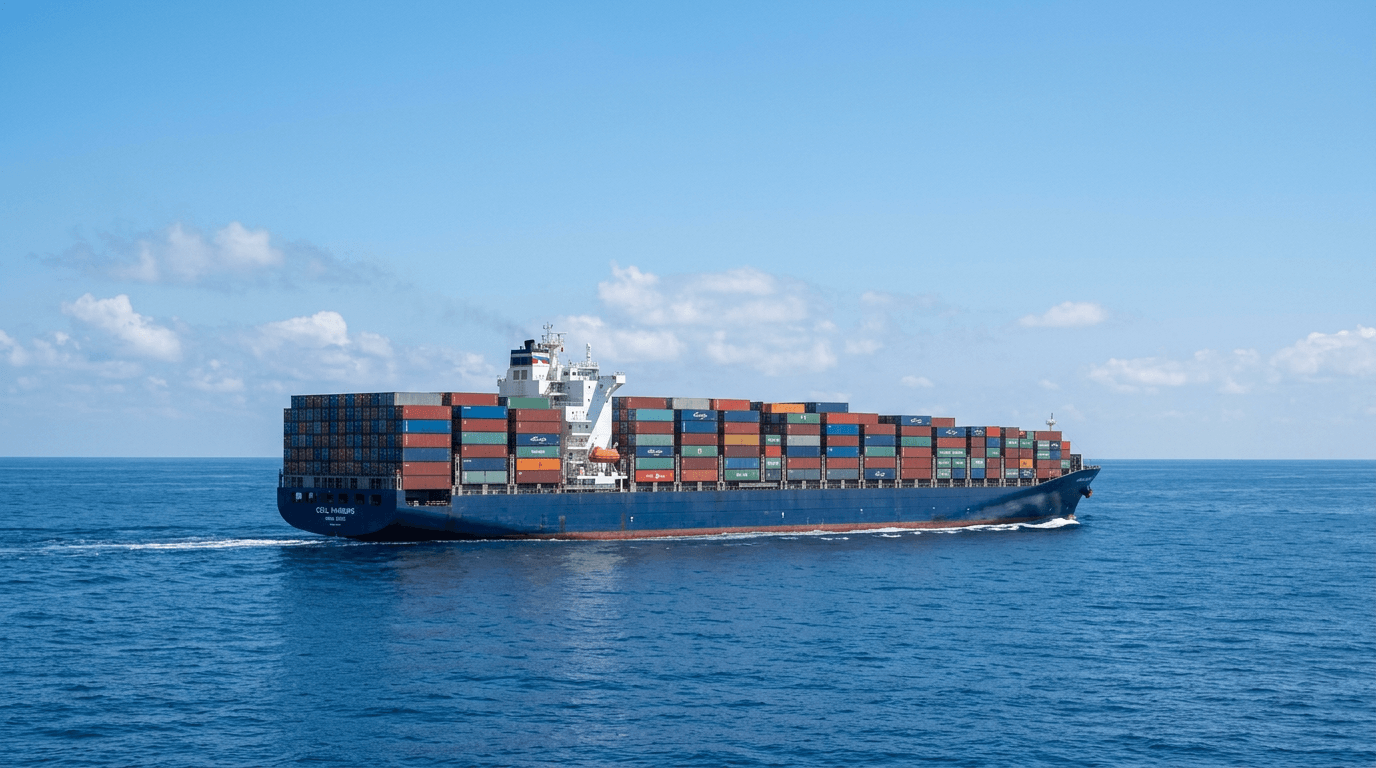
Why Fireworks Are Expensive to Ship
Under the UN Recommendations, fireworks sit in Class 1: Explosives. Three subdivisions matter for importers:
- 1.4G (UN0336) — consumer fireworks: cakes, Roman candles, fountains, sparklers, firecrackers, consumer aerial — the bulk of our export fireworks catalog. Minor blast hazard, no mass explosion.
- 1.3G (UN0335) — display/professional shells. Stricter stowage, higher surcharges.
- 1.1G (UN0333) — mass-explosion hazard. Rarely relevant, mostly specialty large-caliber items.
That classification hits your freight bill four ways: DG surcharges (per container or per ton), restricted vessel capacity, special stowage, and heavier documentation. Each one is negotiable or optimisable — which is what the rest of this guide is about. The cost levers below assume you already understand the seven-step dangerous goods shipping process; if not, skim that first and come back.
Quick win: staying inside 1.4G rather than 1.3G typically saves several hundred dollars per container in surcharges alone — and more once 1.3G's restricted-carrier premiums are counted. Ask your factory to flag any borderline SKUs before you lock the PO.
Where the Money Actually Goes on a 20ft Container
A typical 20ft FCL of 1.4G fireworks out of Shanghai or Ningbo breaks down roughly like this:
- Base ocean freight: $2,000–5,000
- DG surcharge: $500–2,500
- DG documentation: $100–300
- THC (origin + destination): $350–900 combined
- Inland trucking Liuyang → port: $300–600
- Insurance: 0.5–0.8% of cargo value
- Destination customs brokerage: $150–500
All-in landed freight: $3,500–$10,000+ per 20ft. The DG surcharge is 15–25% of the total and is the single biggest lever you can pull.
1. Ship FCL, Not LCL
LCL for Class 1 cargo is a trap. Few consolidators touch explosives, DG surcharges are mostly flat per container, and CFS handling adds another layer of fees. A half-full box costs almost the same as a full one.
If you can't fill a 20ft (roughly 22 CBM / ~16 t net), consolidate seasons into one shipment, fill gaps with non-DG accessories (firing systems, racks, branded merch), or ask your forwarder about DG co-loading with other importers. Going from LCL to FCL typically drops per-unit freight 30–50%.
2. Use a DG-Specialist Forwarder
Generalist forwarders will almost always overcharge you on Class 1. Specialists are worth it because they have:
- Volume agreements with the few carriers that regularly take explosives (MSC, Evergreen, ZIM, Yang Ming).
- Clean DG declarations — no rejections, no demurrage at $100–300/day.
- Real routing knowledge for DG-friendly hubs and transhipment ports.
- Current read on IMDG amendments and port-specific restrictions.
Ask your factory for names. Any serious Liuyang manufacturer works with vetted DG forwarders weekly. Check for FIATA/IATA credentials and explicit Class 1 experience — and ask for references from other fireworks importers.
3. Time Shipments Around the Season
Rates swing hard with the fireworks calendar.
Peak (expensive)
- Mar–Jun: July 4th and European summer build-up. DG slots fill early; rates +20–40%.
- Sep–Oct: NYE, Diwali, Guy Fawkes, plus the general pre-Christmas surge.
Off-peak (cheap)
- Jul–Aug: post-July 4th lull; carriers have spare DG capacity.
- Nov–Feb: post-holiday softness. The pre- and post-CNY windows are usually the cheapest of the year.
For July 4th stock, order Oct–Nov and ship Jan–Feb; for NYE, order May–Jun and ship Jul–Aug. Freight savings alone can hit $1,000–2,000 per container.
4. Load So Weight and Cube Run Out Together
A 20ft of cakes typically runs 14–18 t gross inside a practical loaded volume of about 22 CBM. On FCL you pay for the box either way, so the aim is to have the weight ceiling and the cube ceiling arrive at the same moment instead of paying for space you never filled. On LCL it hits the invoice directly, because the charge is by volume or weight, whichever is greater. Either way, every loading decision matters:
- Mix dense SKUs (firecrackers, small cakes) with bulkier light ones (fountains, sparkler packs) so you hit the weight limit and the volume limit together.
- Have the factory tune carton dimensions to pallet and container geometry — 2 cm off the carton height can add a whole layer per pallet.
- Keep inner packaging snug; avoid wasted void fill while still meeting IMDG cushioning requirements.
- Use the full 2.39 m internal height. Stacking to 1.8 m wastes 25% of the space you already paid for.
5. Negotiate the DG Surcharge
Importers treat DG surcharges like a tax. They aren't — they're negotiable, especially with volume.
- 5+ containers/year: lock a fixed DG rate with your forwarder or carrier. Expect 15–30% off spot.
- Always quote at least three carriers per lane. DG surcharges for the same route can differ by $1,000+.
- 10+ containers/year: apply for a Named Account directly with a carrier and skip the forwarder markup on DG.
- Bundle origin trucking, export clearance, ocean, and destination delivery with one provider for a better all-in.
6. Pick the Right Origin and Destination
Route choice can swing freight by hundreds to thousands per box.
Out of China
Liuyang cargo typically moves through Huangpu Old Port, Shenzhen, Shanghai, or Ningbo. Shanghai has the most carrier options and the sharpest long-haul rates to the Americas, Europe and the Middle East. Ningbo is often better to Asia. Inland Liuyang → port runs $300–600, so let the ocean savings decide.
At destination
- US: LA/Long Beach is the cheapest ocean leg; East Coast (NY, Savannah) adds $500–1,500 but may save more on inland if your DC is east.
- Europe: Rotterdam, Hamburg and Antwerp are the DG workhorses — the main discharge ports for our CE-marked EU range. Piraeus and Valencia can be cheaper for Southern Europe.
- Middle East: Jebel Ali (UAE) is the regional DG hub with frequent direct calls from Shanghai. Dammam and Jeddah serve Saudi Arabia, with Jeddah usually adding 2–4 days but cheaper for Red Sea–oriented importers.
- Latin America (West Coast): Manzanillo (Mexico), Callao (Peru) and San Antonio / Valparaíso (Chile) take the bulk of Pacific Latin freight. West Coast LATAM has fewer DG-capable carriers than the US lane, so booking 6–8 weeks ahead is normal.
- Latin America (East Coast): Santos (Brazil), Buenos Aires (Argentina) and Veracruz (Atlantic Mexico) are the main DG ports. East Coast LATAM is the longest lane out of China and almost always involves transhipment via Singapore or Cartagena — pick a forwarder who has experience with both transhipment hubs.
Direct vs. transhipment
Direct is preferred for DG — no extra handling, less risk of a container sitting in a DG queue. If transhipment is unavoidable, stick to DG-competent hubs like Singapore, Port Klang or Colombo, and avoid congested ports where a Class 1 box can sit for weeks.
7. Get the Paperwork Right the First Time
Documentation is where most importers quietly bleed money. One wrong line on the Dangerous Goods Declaration can trigger:
- Shipment rejection and re-booking ($200–800 + storage)
- Demurrage at $100–300/day while the paperwork is fixed
- Detention at $50–150/day if you overrun the free time
- Destination customs holds of 1–3 weeks plus exam fees
A complete fireworks export file needs:
- DGD/IMO form with proper shipping name, UN number (UN0336 for 1.4G), class, packing group, and NEQ per package and total.
- MSDS/SDS for each product family.
- Classification certificate from a UN-recognised lab (BAM, BRE, or an authorised Chinese body).
- Commercial invoice and packing list showing UN numbers, class and net weight.
- Bill of lading with correct DG marks and emergency contact.
- Destination import licence or permit (ATF in the US, HSE in the UK, Civil Defence in the UAE, GDCD in Saudi Arabia, SEDENA in Mexico, COLOG/CFE in Brazil, DGMN in Chile, SUCAMEC in Peru, ANMaC in Argentina).
Our export team prepares the full DG set for every shipment and keeps near-zero rejections — that alone saves most buyers one avoidable delay per year.
8. Insure Properly, Not Expensively
Marine cover for fireworks runs around 0.5–0.8% of cargo value — higher than standard freight, but skipping it is false economy on a $20–40k container.
- If you ship 3+ containers/year, an annual open-cover policy is 20–35% cheaper than per-voyage.
- Declare real CIF value and make sure the policy is "all risks" including DG-specific perils.
- Insist on warehouse-to-warehouse, not port-to-port — DG cargo takes its biggest hits on inland legs and at terminals.
9. Treat Shipping as a Long-Term Partnership
The biggest compounded savings come from aligning your factory and forwarder over years, not shipments.
- Share your annual selling calendar so production and loading windows line up with off-peak bookings.
- Standardise the product mix so loading plans improve every cycle.
- Pre-book DG slots on fixed vessels with your forwarder for peak season.
- Review the cost breakdown after every shipment — identify what moved, fix it next time.
10. Consolidate Multi-Market Volume Through One Regional Hub
The levers above apply to any lane. There is one more that only opens up once you are selling into more than one market in a region — and for multi-country GCC distributors it is often the single largest saving of all. The mistake most multi-market buyers make is shipping a separate part-load to each country: a few pallets to Dubai, a few to Dammam, a few to Doha. Every one of those consignments pays its own DG handling, its own terminal charges and its own documentation fee, and not one of them fills a box.
The fix is to consolidate a single mixed Class 1.4G FCL into one regional hub, land and break bulk once, then redistribute by short-sea or road. Jebel Ali is the default choice for the Gulf: it sits inside a free zone with a dedicated DG yard, it is built for re-export, and it is reached via the Strait of Hormuz, so the container never transits the Red Sea and carries no war-risk premium on the ocean leg. From the hub, onward delivery to Dammam, Hamad, Sohar, Bahrain or Kuwait moves on cheap regional legs instead of separate deep-sea bookings.
- One ocean booking instead of three or four — a single origin DG handling and documentation set rather than the same fees duplicated per country.
- FCL economics on the whole volume — the mixed box fills a 20ft to its practical ~22 CBM instead of several half-empty LCL parcels each carrying the per-CBM DG penalty.
- Cleaner war-risk exposure — routing through the Gulf keeps the long leg off the Red Sea; only a direct Jeddah or King Abdullah Port call would attract the surcharge.
One caution: consolidation saves freight, not compliance. Each destination market still needs its own import permit and conformity file — SABER for Saudi Arabia, Civil Defence approval for the UAE, MOI sign-off for Qatar — and a free-zone re-export needs the paperwork written correctly at break-bulk. The port-by-port routing picture is in our guide to shipping fireworks to the Middle East.
FOB, CIF or DDP? The Incoterm Quietly Decides Who Controls Your DG Freight
One cost lever sits upstream of every tip above, and most first-time importers never touch it: the Incoterm you buy on. For Class 1 cargo it does more than split the bill — it decides who books the DG slot, and therefore whose forwarder margin and whose carrier deal end up on your surcharge.
- FOB (Free On Board) — you control the ocean leg and choose the forwarder. This is what lets you actually apply tips 2 and 5 above: your own vetted DG-specialist and your own volume agreement. For any buyer moving more than a box or two a year, FOB is usually the lowest landed DG cost.
- CIF (Cost, Insurance & Freight) — the factory arranges freight to your destination port. Genuinely convenient on a first shipment, but you inherit the seller's carrier and any freight markup, and you still owe destination THC, DG handling, clearance and the import permit. Fine to start on; re-quote it against FOB once you know your real volume.
- DDP (Delivered Duty Paid) — tempting because it looks door-to-door simple, but on explosives it usually carries a real risk premium, and in most of the markets we ship to the import permit can only legally be held by a licensed local importer (Civil Defence in the GCC, SEDENA in Mexico, DGMN in Chile). That makes a clean, fully-compliant DDP on Class 1 the exception, not the rule.
The practical move for Middle East and Latin America buyers: as soon as you are past your first shipment, price FOB with your own DG forwarder against the factory's CIF quote. The gap is often a few hundred dollars per container that is currently sitting quietly in someone else's margin. The full FOB / CIF / DDP trade-off for Class 1 is laid out from the logistics side in our Middle East shipping guide; for the Pacific and Atlantic lanes and the permit-holder rules that shape your Incoterm choice, see our Latin America import hub.
Worked Example: 35% Off Freight in Two Cycles
A Middle East distributor was paying about $7,200 per 20ft Shanghai → Jebel Ali on spot rates with a generalist forwarder. After applying the playbook, they landed at $4,700:
- Moved to a DG-specialist with MSC/ZIM volume contracts — saved $800 on surcharge
- Signed a 6-container annual commitment — saved $600 on base freight
- Shifted the main ship window from April to February — saved $500
- Reworked packing mix — fit 12% more product per container
- Cleaned up documentation — zero re-bookings, saved ~$300 in demurrage
Roughly $2,500/container, ~$15,000/year across 6 boxes. A 35% cut.
FAQ
What DG class are fireworks?
Consumer fireworks are Class 1.4G (UN0336). Display/professional fireworks are Class 1.3G (UN0335) and carry stricter stowage and higher surcharges.
What does a 20ft of fireworks cost to ship from China?
Typically $3,500–$10,000 all-in, depending on destination, carrier, season and DG surcharges. FCL is always much cheaper per unit than LCL for Class 1.
Can fireworks go by air?
Almost never. IATA DGR blocks most consumer fireworks from commercial air. A few 1.4S items may qualify under tight conditions, but ocean is the practical — and far cheaper — route.
How do I actually lower DG surcharges?
Ship off-peak, stick to FCL, use a DG-specialist forwarder with volume carrier deals, pick DG-friendly ports, commit annual volume, and file clean paperwork so you never pay for a re-booking.
What documents do I actually need?
DGD/IMO form, MSDS/SDS, classification certificate from a UN-recognised lab, commercial invoice and packing list with UN numbers, BL with DG marks, and the destination import licence (ATF in the US, HSE in the UK, etc.).
Is FOB or CIF cheaper for shipping fireworks?
Past your first shipment, FOB is usually cheaper, because you control the ocean booking and can put your own DG-specialist forwarder and volume deal on the surcharge. CIF is convenient to start on but bundles in the seller's carrier and freight margin. Always re-quote FOB against CIF once you know your annual volume.
Can I ship fireworks DDP to my door?
Rarely in a clean, compliant way. In most Middle East and Latin America markets the explosives import permit can only be held by a licensed local importer (Civil Defence, SEDENA, DGMN), so a foreign seller cannot act as importer of record. DDP on Class 1 also carries a risk premium — FOB or CIF to a licensed local consignee is the normal route.
Freight doesn't have to eat your margin. Classify right, book right, pack right, and document right — the savings compound every container.
Need Help Shipping Fireworks Out of China?
We handle the full DG export file for every shipment and can introduce vetted forwarders on the major lanes. Tell us your destination and volume — we'll come back with a realistic landed-cost plan.
WhatsApp Email